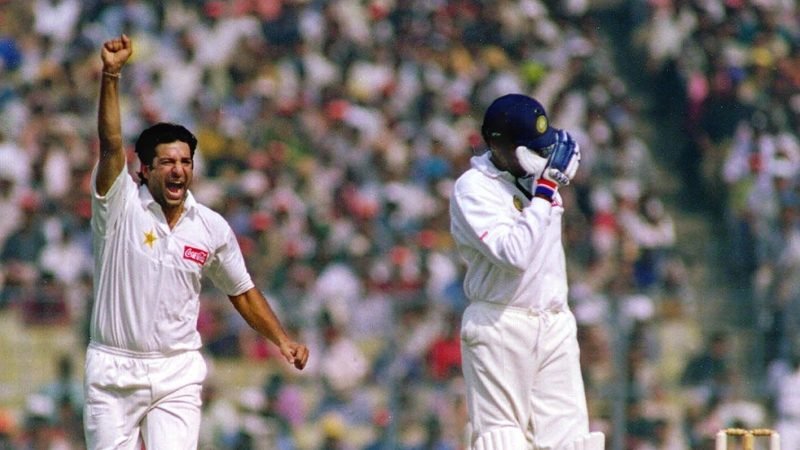
On September 24, 2007, at Johannesburg’s Wanderers Stadium, cricket witnessed a seismic shift that would ripple through the sport’s history. The final of the inaugural ICC World Twenty20 between India and Pakistan wasn’t just a match—it was the birth of a new era. This wasn’t a genteel Test match or a predictable ODI; it was a high-octane, edge-of-the-seat thriller that redefined how cricket was played, watched, and loved. Let’s dive into why this clash of arch-rivals became the match that changed cricket forever.
Why This Match Mattered
The 2007 T20 World Cup final was more than a game—it was a cultural phenomenon. India and Pakistan, two nations with a storied rivalry, faced off in the first-ever global T20 event. The stakes were sky-high: India hadn’t won a World Cup since 1983, and Pakistan’s last triumph was in 1992. The electric atmosphere at the Bullring, as Wanderers is known, crackled with anticipation, setting the stage for a match that would reshape cricket’s future.
The Rise of T20 Cricket
A New Format Takes Center Stage
T20 cricket was still in its infancy in 2007. Introduced in England in 2003 to make the game faster and more fan-friendly, it was a gamble by the cricketing world to attract younger audiences. The 2007 final proved T20’s potential to deliver drama in just three hours, unlike the sprawling narratives of Test matches or the day-long commitment of ODIs.
How T20 Changed the Game
The India-Pakistan final showcased T20’s unique ability to keep fans glued to their seats. The match demonstrated that a game could swing wildly in a single over, that no lead was safe, and that unorthodox shots and bold strategies could turn the tide. This wasn’t cricket as our grandparents knew it—it was a revolution.
- Speed and Excitement: Matches wrapped up in three hours, perfect for modern attention spans.
- Innovative Shots: The scoop, ramp, and reverse sweep became mainstream, thanks to players like Misbah-ul-Haq.
- Strategic Depth: Captains like MS Dhoni showed that T20 required sharp, real-time decision-making.
The Match: A Rollercoaster of Emotions
The Early Blows
Pakistan started strong, with Imran Nazir smashing 33 off 14 balls, racing to 53 for 2 by the sixth over. But India’s bowlers, led by RP Singh, clawed back, reducing Pakistan to a shaky 77 for 6. It seemed like India had the upper hand, but T20’s unpredictability was about to take center stage.
Misbah’s Heroics and Heartbreak
Misbah-ul-Haq, a relatively unsung player at the time, almost single-handedly dragged Pakistan back into the game. With 34 runs scored in the 17th and 18th overs, Pakistan needed just 13 runs off the final six balls. The crowd was on its feet, hearts pounding. Then came the moment that would define the match—and T20 cricket itself.
The Final Over: Joginder’s Moment of Glory
With Harbhajan Singh smashed for three sixes by Misbah in an earlier over, MS Dhoni made a bold call. He handed the ball to Joginder Sharma, a relatively inexperienced medium-pacer with just seven international matches under his belt. The first ball was a wide—so wide it barely landed on the pitch. The second was a swing and a miss. The third, a full toss, was dispatched for six. Suddenly, Pakistan needed just six runs off four balls. Then, Misbah attempted a scoop—a shot he’d mastered earlier in the tournament. But this time, it floated limply into the hands of Sreesanth, a fielder with known depth-perception issues. India won by five runs, and the T20 era was born.
Why This Match Was a Game-Changer
The Birth of a Global Phenomenon
The 2007 final didn’t just crown India as champions; it launched T20 cricket into the stratosphere. The match’s thrilling finish, watched by over 400 million people worldwide, proved that T20 could captivate audiences like no other format. It paved the way for the Indian Premier League (IPL) in 2008, which turned cricket into a global entertainment juggernaut.
Tactical Evolution
The match highlighted T20’s strategic depth. Captains had to think on their feet, balancing aggression with caution. Dhoni’s decision to trust Joginder Sharma over a seasoned bowler like Harbhajan was a masterstroke that showed T20 rewarded bold, unconventional choices.
The Rise of New Heroes
Players like Misbah-ul-Haq and Joginder Sharma, who were on the fringes of their teams, became household names overnight. T20 gave underdogs a stage to shine, proving that in this format, anyone could be a hero—or a villain—in a single moment.
Comparing T20 to Traditional Cricket
| Aspect | Test Cricket | ODI Cricket | T20 Cricket |
|---|---|---|---|
| Duration | Up to 5 days | 6–8 hours | 3 hours |
| Overs per Innings | Unlimited | 50 overs | 20 overs |
| Strategy | Endurance, technique | Balance of attack and defense | Aggressive, real-time decisions |
| Fan Appeal | Traditionalists, purists | Broad audience | Young, casual fans |
| Key Moment | Long battles, partnerships | Middle-overs consolidation | Game-changing overs |
Pros and Cons of T20 Cricket
Pros:
- Fast-paced, ideal for modern lifestyles.
- Attracts new fans, especially younger audiences.
- Encourages innovation in batting and bowling.
- Boosts commercial opportunities (e.g., IPL).
Cons:
- Purists argue it dilutes cricket’s technical essence.
- Can favor power-hitting over skill.
- Risk of oversaturation with too many leagues.
The Cultural Impact
A Personal Memory
I remember watching the 2007 final as a teenager, huddled around a grainy TV screen with my family. The tension was palpable—every ball felt like it could change the world. When Sreesanth caught that final ball, our living room erupted. It wasn’t just a win for India; it felt like a victory for every cricket fan dreaming of a new kind of game. That moment hooked me on T20 for life.
A Global Shift
The match’s impact went beyond the field. It inspired a generation of players to embrace T20’s fearless style. Leagues like the IPL, Big Bash, and PSL owe their existence to the excitement generated that day in Johannesburg. Cricket became “cricketainment,” blending sport with Bollywood-style spectacle, cheerleaders, and music.
People Also Ask (PAA)
What was the match that changed cricket forever?
The 2007 ICC World T20 final between India and Pakistan is widely regarded as the match that changed cricket. Its thrilling finish and the introduction of T20’s fast-paced format revolutionized the sport, making it more accessible and exciting for global audiences.
Why was the 2007 T20 World Cup significant?
The 2007 T20 World Cup introduced the world to T20 cricket, a format that condensed the game into a three-hour spectacle. The India-Pakistan final showcased its potential for drama, paving the way for lucrative leagues like the IPL.
Where can I watch highlights of the 2007 T20 final?
Highlights of the 2007 T20 World Cup final are available on platforms like YouTube, ESPNcricinfo, and the ICC’s official website. Check streaming services like Disney+ Hotstar for archived footage in some regions.
What are the best tools for following T20 cricket?
For live scores and updates, apps like Cricbuzz, ESPNcricinfo, and the ICC app are top choices. For in-depth analysis, websites like Cricinfo and The Cricket Monthly offer expert insights. For fantasy cricket, platforms like Dream11 are popular among fans.
How T20 Continues to Shape Cricket
The IPL Revolution
The success of the 2007 final directly led to the IPL’s launch in 2008. This glitzy league combined cricket with entertainment, attracting top players and massive audiences. Today, the IPL is a billion-dollar industry, with players like Tim David earning millions for their power-hitting skills.
Innovations in Play
T20 has transformed how cricket is played. Batters now routinely play scoops, ramps, and reverse sweeps—shots once considered risky. Bowlers have adapted with variations like slower balls and knuckleballs. Even fielding has evolved, with athleticism and quick reflexes becoming non-negotiable.
Cricket at the Olympics
The 2007 final’s global appeal helped push T20 toward the Olympics. Set to return at the Los Angeles 2028 Games, T20’s inclusion reflects its status as cricket’s most popular format. Its short duration and universal appeal make it perfect for the Olympic stage.
FAQ
Why is the India-Pakistan 2007 T20 final considered iconic?
The match’s nail-biting finish, with Misbah’s scoop and Joginder’s heroics, captured the essence of T20’s unpredictability. It also marked the arrival of a format that would dominate cricket.
How did the 2007 T20 World Cup impact the IPL?
The final’s massive viewership and excitement convinced the BCCI to launch the IPL, which revolutionized cricket by blending sport with entertainment and attracting global talent.
Who were the key players in the 2007 T20 final?
For India, MS Dhoni’s captaincy and Joginder Sharma’s final over were pivotal. For Pakistan, Misbah-ul-Haq’s near-heroic innings and Imran Nazir’s explosive start stood out.
Where can I learn more about T20 cricket’s history?
Visit the ICC’s official website (icc-cricket.com) or read articles on The Cricket Monthly for detailed insights into T20’s evolution and impact.
How has T20 changed cricket’s global reach?
T20’s fast-paced format has attracted new fans in non-traditional cricket markets like the USA and Europe, with leagues like the IPL drawing global audiences.
Conclusion: A Legacy That Endures
The 2007 T20 World Cup final wasn’t just a match—it was a turning point. It showed the world that cricket could be fast, thrilling, and universally appealing. From the IPL’s glitz to T20’s Olympic aspirations, the reverberations of that day in Johannesburg are still felt today. As a fan, I can’t help but smile at how a single scoop shot and a fumbled catch changed the game I love forever. If you’re as captivated by this moment as I am, check out highlights on ESPNcricinfo or dive into The Cricket Monthly for more stories that make cricket the beautiful game it is.