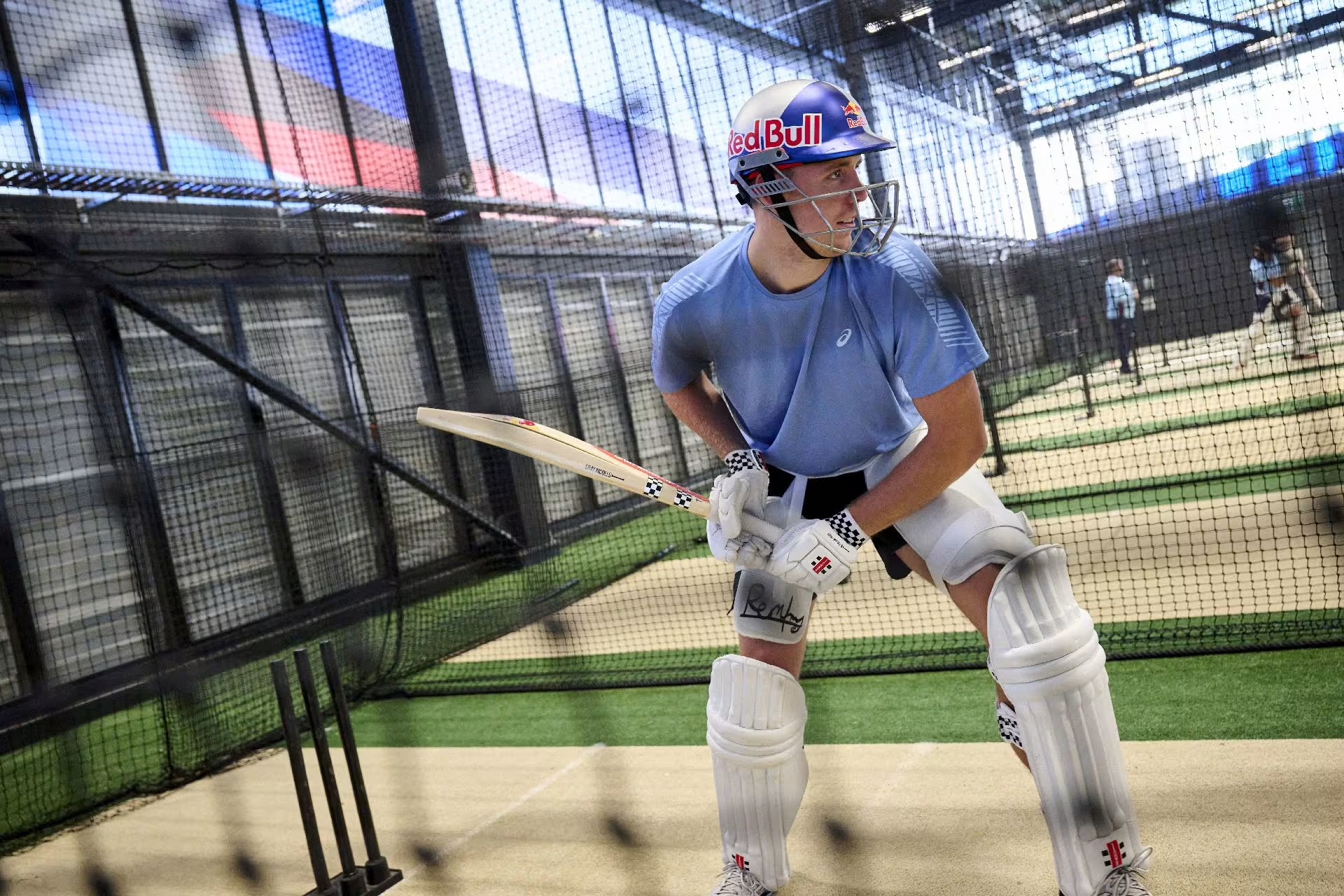
Remember that first time I picked up a cricket bat as a kid in the backyard? I was about eight, swinging wildly at a tennis ball my dad bowled underarm, missing more than I hit, but laughing the whole time. That simple joy hooked me on cricket, a game that’s equal parts strategy, skill, and sheer excitement. If you’re new to this sport, whether you’re watching your first match or itching to play, this guide breaks it all down without overwhelming you. We’ll cover everything from the basics to getting started, drawing on real experiences and tips that helped me and countless others fall in love with the game.
What is Cricket?
Cricket is a bat-and-ball sport played between two teams of eleven players each on an oval field with a rectangular pitch in the center. At its core, one team bats to score runs while the other fields and bowls to prevent that. It’s a game that originated in England centuries ago but now captivates billions worldwide, from dusty streets in India to packed stadiums in Australia.
What draws people in is the blend of patience and power—think chess meets baseball with a dash of endurance. I remember watching my first Test match on TV, puzzled by how it could last five days, but soon I was glued to the tactical battles unfolding.
Basic Rules of Cricket
Understanding the rules turns confusion into appreciation. The game revolves around innings where teams alternate batting and fielding. A match ends when all innings are complete, and the team with more runs wins.
Don’t worry if it seems complex at first; even pros debate umpiring calls. Start with the essentials, and the rest clicks with time.
The Objective of the Game
The main goal is simple: score more runs than the opposition. Batsmen hit the ball and run between wickets to tally points, while bowlers aim to dismiss them. Runs come from crossing the pitch or hitting boundaries—four runs if it rolls over the edge, six if it flies.
I once scored my first boundary in a local park game; that thrill of the ball racing away still gives me chills.
Teams and Players
Each side has eleven players: batsmen, bowlers, fielders, and a wicket-keeper. Roles can overlap, like all-rounders who excel at both batting and bowling. The captain leads strategy, deciding who bowls when.
In my early days playing school cricket, I was a fielder who dreamed of batting—turns out, good fielding wins games too, saving crucial runs.
How Scoring Works
Runs are scored by running between the two wickets after hitting the ball. Boundaries add four or six without running. Extras like no-balls (illegal deliveries) or wides (too far from the batsman) give free runs.
Picture this: a tense match where one run decides victory—I’ve been there, heart pounding as I sprinted for that winning single.
Ways to Get Out (Dismissals)
Batsmen can be dismissed in ten ways, but common ones include bowled (ball hits wicket), caught (fielder grabs it mid-air), run out (wicket broken while running), or LBW (leg before wicket, blocking with legs).
My funniest dismissal? Tripping over my own feet for a run out—lesson learned: always watch the ball, not your ego.
Overs and Innings
An over is six legal deliveries by one bowler. Innings vary by format: one per team in limited-overs, two in Tests. Teams switch after dismissals or overs end.
It’s like chapters in a story; each inning builds tension, especially when chasing a target.
Cricket Equipment for Beginners
Getting the right gear makes playing safe and fun. You don’t need pro-level stuff to start—just basics to protect and perform.
I started with a borrowed bat that felt like a log, but upgrading to a lighter one transformed my game. Here’s what you’ll need.
- Cricket Bat: Willow wood, flat on one side. Beginners should choose lightweight English willow for easier swings.
- Ball: Leather-covered cork, red for day games, white for limited-overs. Start with a softer tennis ball for practice.
- Wickets and Bails: Three stumps with two bails on top. Portable sets are great for backyard play.
- Protective Gear: Helmet, pads, gloves, and box (abdominal guard). Essential to avoid injuries from fast balls.
- Clothing: Whites for traditional games, colored kits for T20. Comfortable spikes for grip on grass.
| Equipment | Best for Beginners | Price Range (USD) | Why It’s Essential |
|---|---|---|---|
| Bat | Lightweight willow | 50-150 | Core tool for hitting; balanced weight helps control. |
| Helmet | Adjustable with grill | 40-100 | Protects head from bouncers—safety first! |
| Pads | Foam-padded | 30-80 | Shields legs from impacts during batting. |
| Gloves | Leather with padding | 20-60 | Grip and hand protection while batting. |
| Ball | Soft practice version | 10-30 | Builds confidence without hard hits. |
Pros of starting with basic kit: Affordable, easy to handle, focuses on learning fundamentals.
Cons: May wear out faster; upgrade as skills improve for better performance.
For recommendations, check out sites like Cricket Store Online for beginner bundles.
How to Bat Like a Pro (Beginner Tips)
Batting is the glamorous part—facing the bowler, timing your shots. Grip the bat firmly but relaxed, with hands together mid-handle.
Stand sideways, feet shoulder-width, knees bent for balance. Watch the bowler’s arm to anticipate the ball.
My tip from experience: Practice shadow batting in front of a mirror to perfect stance—it’s how I fixed my wobbly technique.
Front Foot Shots
Drive straight or off-side by stepping forward. Ideal for full-length balls. Keep head still, swing through the line.
I hit my first four with a cover drive; felt like a hero, but it took hours of drills.
Back Foot Shots
Pull or cut short balls by shifting weight back. Great for bouncers. Rotate hips for power.
Remember that pull shot gone wrong? Mine sailed into the neighbor’s yard—humor in the mishaps keeps it fun.
Batting Drills for Newbies
- Shadow swings: Mimic shots without a ball to build muscle memory.
- Throw-downs: Partner gently tosses balls for easy hits.
- Net practice: Face bowlers in enclosed areas to simulate games.
Bowling Basics: Spin vs. Pace
Bowling is about accuracy and variation. Pace bowlers run in fast; spinners twist the ball for turn.
Grip seam upright for swing, or across for spin. Release with a high arm for bounce.
As a kid, I bowled endless overs to my brother—started wild, but consistency came with patience.
Fast Bowling Techniques
Run-up smooth, jump at crease, snap wrist. Aim for yorkers (full toss at feet) or bouncers.
Pros: Intimidates batsmen. Cons: Tiring, injury risk if form’s off.
Spin Bowling Tips
Off-spin: Fingers across seam, turn away from right-handers. Leg-spin: Wrist flick for opposite turn.
Watch tutorials on YouTube for grips—helped me add variety to my arsenal.
Fielding and Wicket-Keeping
Fielding stops runs, creates outs. Positions like slip (behind batsman) catch edges; mid-off fields drives.
Wicket-keepers crouch behind stumps, glove catches and stumpings.
I once dropped a sitter in a friendly match—team ribbed me, but it taught focus and quick reflexes.
- Close-in positions: Slips, gully—for catches off edges.
- Outfield: Deep mid-wicket, long-on—for boundaries.
- Drills: Catching relays, throwing accuracy games.
Different Formats of Cricket
Cricket isn’t one-size-fits-all. Formats suit different paces, from marathon Tests to quick T20s.
Test cricket tests endurance; T20 thrills with big hits. Choose based on time and style.
Test Matches
Five days, two innings each. Unlimited overs, focus on draws or wins.
I watched a nail-biter draw once—emotional rollercoaster, pure cricket essence.
One-Day Internationals (ODIs)
50 overs per side, one day. Balanced attack and defense.
Great for beginners to learn pacing, unlike endless Tests.
T20 Cricket
20 overs, three hours. Explosive, fan-favorite with sixes galore.
Pros: Exciting, accessible. Cons: Less strategy depth than longer formats.
| Format | Duration | Overs | Best For |
|---|---|---|---|
| Test | 5 days | Unlimited | Tactical depth, endurance. |
| ODI | 1 day | 50/side | Balanced play, chases. |
| T20 | 3 hours | 20/side | Fast action, entertainment. |
Compare to baseball: T20 like home run derbies, Tests like extra innings epics.
Training Tips for Cricket Beginners
Building skills takes practice, but start small. Warm up with jogs and stretches to avoid strains.
Focus on fundamentals: Bat 20 minutes daily, bowl to targets.
From my journey, consistency beats intensity—little daily sessions add up.
- Footwork drills: Ladder runs for agility in batting.
- Strength training: Core exercises for bowling power.
- Watch pros: Analyze Virat Kohli’s technique on ESPNcricinfo.
- Join apps like CricHeroes for local matches and tips.
- Group sessions: Play with friends for fun feedback.
Where to Get Started: Clubs and Resources
Find local clubs via national boards like ECB or ICC directories. Many offer beginner programs.
Online: YouTube channels for tutorials, apps for virtual coaching.
I joined a community club—best decision, made lifelong friends while learning.
Navigational tip: Search “cricket clubs near me” or visit ECB’s beginner guide.
Best Tools and Gear for Beginners
Transactional advice: Invest in quality basics. Gray-Nicolls bats for balance, Kookaburra balls for durability.
Pros of premium gear: Lasts longer, better feel. Cons: Higher cost upfront.
Shop at Amazon or specialized stores for deals.
Compare brands:
- Gray-Nicolls: Reliable, mid-price.
- Kookaburra: Affordable, good for starters.
People Also Ask
Drawing from common searches, here are real questions folks ask on Google about cricket for beginners, with straightforward answers.
What are the basic rules of cricket?
Two teams of 11 play; bat to score runs, bowl to dismiss. Innings alternate, highest score wins. Key outs: bowled, caught, run out.
How do you play cricket step by step?
Set up pitch, toss coin, bat/bowl. Hit ball, run for scores. Six balls per over. Switch after outs or innings.
Is cricket easy for beginners?
Yes, with practice. Start with soft balls, focus on fun. It builds coordination and fitness naturally.
What is the best way to learn cricket?
Watch matches, practice basics, join clubs. Online guides like wikiHow help too.
How many players are in cricket?
Eleven per team, including batsman, bowlers, fielders, and keeper.
FAQ
How long does a cricket match last?
Depends on format: T20 about 3 hours, ODIs a day, Tests up to 5 days. Shorter ones suit beginners.
What equipment do I need as a beginner?
Bat, ball, wickets, helmet, pads, gloves. Start basic; add as you progress. Check guides for fits.
Can I play cricket alone?
Yes, for practice: Shadow bat, bowl at walls. But games need at least two—invite friends!
What’s the difference between Test and T20?
Test is strategic, long; T20 fast, aggressive. Both fun, but T20 easier entry.
How do I improve my batting?
Drill footwork, watch ball closely, practice shots. Consistency key—daily swings help.
Wrapping up, cricket’s more than a game; it’s a community, a challenge, a passion. From that backyard swing to cheering in stadiums, it grows on you. Grab a bat, find a pitch, and dive in—you’ll wonder why you waited. For more, explore our internal guides on advanced techniques or official rules at ICC.