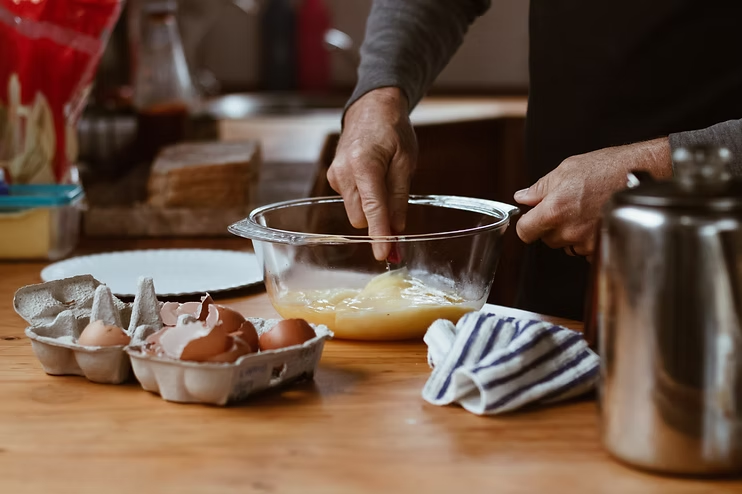
Hey there, fellow food lover. Picture this: It’s a rainy Saturday afternoon, and I’m in my tiny apartment kitchen, sleeves rolled up, feeling like a mad scientist crossed with a painter. On one side of the counter, I’ve got a sizzling pan of stir-fry where I just tossed in extra garlic because, why not? It smelled off, so I fixed it on the fly. On the other, a mixing bowl with what should be chocolate chip cookies—but the dough looks more like cement because I swapped butter for oil without thinking twice about ratios. That was my lightbulb moment years ago, the one that made me realize cooking and baking aren’t just siblings in the kitchen; they’re like that artistic free spirit and the meticulous engineer who plan every detail. If you’ve ever wondered why your grandma’s spaghetti sauce is legendary but her pies flop half the time (or vice versa), you’re in the right place. Today, we’re diving deep into the differences between cooking and baking—not just the textbook stuff, but the real-life quirks that make one feel like jazz improv and the other like solving a chemistry puzzle. Stick with me; by the end, you’ll laugh at your past kitchen fails and maybe even tackle that recipe you’ve been eyeing.
What Exactly Is Cooking?
Cooking is that broad, forgiving umbrella under which most of our daily meals fall. It’s the act of preparing food by applying heat in various ways—think stovetop simmering, grilling over an open flame, or even slow-cooking in a pot. At its heart, it’s about transforming raw ingredients into something nourishing and delicious, often with room for your personal flair.
I remember my first solo cooking adventure as a broke college kid: a haphazard chicken curry where I eyeballed the spices and added yogurt because the sauce looked too thick. It wasn’t perfect, but it was mine—tweaked with a dash more cumin after the first bite. That’s cooking in a nutshell: flexible, sensory-driven, and full of those “aha” adjustments that turn okay into unforgettable.
Unlike more rigid methods, cooking lets you taste as you go, swap veggies based on what’s in the fridge, or crank up the heat if things are moving too slow. It’s why home cooks worldwide swear by it for weeknight dinners or backyard barbecues.
Breaking Down the Basics of Baking
Baking, on the other hand, zeroes in on a specific slice of the cooking world: using dry, enclosed heat—usually from an oven—to create goods like breads, cakes, and pastries. It’s not just about heat; it’s a timed dance where every ingredient plays a precise role in chemical reactions that build structure, rise, and texture.
My baking epiphany came during a family holiday when I followed a pie recipe to the letter for the first time. No more lumpy crusts from my “creative” flour dumps. Instead, flaky layers emerged like magic, all because I measured the butter in grams and chilled the dough just right. It felt less like cooking and more like conducting an experiment where one wrong variable spells disaster—or at least a hockey puck of a loaf.
What sets baking apart is its reliance on consistency; ovens don’t forgive guesswork, and neither do rising agents like yeast. It’s the method behind those bakery-fresh scents that make your house smell like heaven on weekends.
The Art of Cooking: Creativity Unleashed
One of the biggest differences between cooking and baking shines through in their mindsets—cooking is pure artistry, a canvas where intuition rules. You season to taste, layer flavors on instinct, and pivot if the dish veers off course, much like a jazz musician riffing off a melody.
Take my go-to stir-fry routine: Start with oil heating in a wok, toss in garlic and ginger for that aromatic base, then whatever proteins and veggies are wilting in the crisper. If it’s too spicy, a splash of coconut milk saves the day. No recipe survives intact, and that’s the joy—it’s forgiving, letting your mood or pantry dictate the outcome.
This creative freedom makes cooking ideal for busy evenings or impressing friends with fusion twists, like adding kimchi to a classic quesadilla. It’s less about perfection and more about the story the flavors tell.
The Science Behind Baking: Precision Matters
Flip the script to baking, and suddenly you’re in lab-coat territory—it’s science wrapped in an apron, where measurements aren’t suggestions but non-negotiable formulas. Ingredients interact in precise ways: flour builds gluten for chew, sugar tenderizes and caramelizes, eggs bind and leaven.
I learned this the hard way with a batch of scones that turned into doorstops. I’d “cooked” plenty, so I winged the baking powder. Spoiler: They didn’t rise. Turns out, that teaspoon is crucial for the CO2 bubbles that give lift. Now, I weigh everything on a scale, treating recipes like blueprints from a trusted engineer.
Baking’s scientific edge means failures teach volumes—overmix the batter, and you get tough muffins; underbake, and it’s raw in the middle. But master it, and you unlock consistent triumphs, like golden loaves that rival pro bakeries.
Heat Sources: Stovetop Chaos vs. Oven Calm
When it comes to applying heat, cooking and baking diverge like a bustling street market from a quiet library. Cooking thrives on direct, variable sources—stoves for boiling pasta, grills for seared steaks, or even microwaves for quick reheats—allowing you to control intensity and flip midway.
My favorite cooking memory? Grilling skewers at a beach bonfire, adjusting flames with a squirt bottle because the coals got too hot. It was chaotic fun, with smoke and sizzle dictating the pace, and the results were smoky perfection every time.
Baking, though, demands the steady embrace of an oven’s dry heat, circulating evenly at set temps from 300°F for custards to 450°F for artisan breads. No poking or stirring; just set it and trust the timer. This hands-off approach builds suspense, like waiting for bread to proof.
Tools of the Trade: What’s in Your Kitchen Arsenal?
Your toolkit reveals another chasm between cooking and baking—cooking gear is versatile and rugged, while baking demands specialized precision instruments. For cooking, a trusty chef’s knife, cast-iron skillet, and wooden spoon cover most bases, handling everything from chopping onions to deglazing pans.
I’ve hauled my beat-up Dutch oven through countless moves; it’s seen braises, soups, and even makeshift pizza stones. It’s the Swiss Army knife of pots—durable, multi-use, and full of character from years of stains.
Baking calls for measured elegance: digital scales for gram-accurate flour, silicone mats to prevent sticking, and cooling racks to avoid soggy bottoms. I splurged on an offset spatula after frosting disasters, and it transformed cake decorating from frustration to finesse.
Essential Cooking Tools for Everyday Wins
- Chef’s Knife: Sharp and balanced for effortless chopping—mine’s 8 inches, honed weekly.
- Non-Stick Skillet: Heats evenly for eggs or sautés; opt for 10-12 inches.
- Wooden Spoon: Gentle on pots, perfect for stirring sauces without scratching.
Must-Have Baking Gear for Newbies
- Digital Scale: Weighs ingredients precisely; beats cups every time for consistency.
- Stand Mixer: Kneads dough effortlessly—start with a basic 5-quart model.
- Oven Thermometer: Your oven might lie; this ensures true temps for reliable rises.
Measuring Up: Flexibility vs. Exactitude
Ah, measurements—the heart-pounding divide that trips up so many. Cooking embraces eyeballing and tasting, where a “pinch” of salt or “handful” of herbs keeps things loose and adaptable to what you’ve got on hand.
During a power outage last summer, I cooked risotto by feel—stirring arborio rice with whatever broth simmered nearby. It was al dente magic, seasoned with garden basil, proving cooking’s resilience in imperfect scenarios.
Baking scoffs at such whimsy; it’s all about exact volumes and weights, as tiny shifts in ratios can derail reactions. Forget to level your baking soda? Flat pancakes await. I now use a scale religiously, turning guesswork into gram-for-gram success.
Ingredient Interactions: Flavor Fusion or Chemical Ballet?
Ingredients behave wildly differently in each realm. In cooking, it’s about harmony—proteins tenderize in acids, veggies soften in steam, and spices bloom in hot oil, all adjustable mid-process for balanced bites.
My Thai green curry experiment? Coconut milk mellowed the heat, fish sauce added umami, and a late lime squeeze brightened it all. Layers built intuitively, like composing a song where notes evolve.
Baking’s ingredients are divas in a symphony: Yeast ferments sugars for rise, butter creams with sugar for air pockets, and acids activate leaveners. Mess with the script, and the whole performance flops—too much liquid, and cookies spread into puddles.
How Key Ingredients Play Differently
| Ingredient | Role in Cooking | Role in Baking |
|---|---|---|
| Flour | Thickener for sauces (e.g., roux) | Structure builder via gluten formation |
| Eggs | Binder in meatballs | Leavener and emulsifier for fluff |
| Butter | Flavor base in sautés | Creaming agent for tenderness and rise |
| Sugar | Caramelizer in glazes | Tenderizer and moisture retainer |
Pros and Cons: Weighing the Kitchen Choices
Every method has its charms and pitfalls, especially when you’re deciding between a quick stir-fry or weekend scones. Let’s break it down honestly—no sugarcoating (pun intended).
Pros and Cons of Cooking
Pros:
- Endless creativity: Swap ingredients freely for low-carb twists or vegan swaps.
- Quick adjustments: Taste and tweak for spot-on seasoning every time.
- Versatile for meals: From salads to soups, it covers breakfast to dinner.
Cons:
- Inconsistent results: Overcook the chicken, and it’s tough—no do-overs.
- Messier process: Splattering oils and steaming pots demand cleanup crews.
- Skill-dependent: Beginners might under-season, leading to bland bites.
Pros and Cons of Baking
Pros:
- Predictable outcomes: Follow the formula, get bakery-level goods.
- Therapeutic rhythm: Mixing and waiting build patience and zen.
- Shareable delights: Cookies and loaves wow crowds effortlessly.
Cons:
- No room for error: One misplaced teaspoon, and it’s bake-sale rejects.
- Time-intensive: Proofing and cooling stretch sessions to hours.
- Equipment-heavy: Startup costs for scales and pans add up fast.
Roasting vs. Baking: A Quick Side Note
People often blur roasting into the baking convo, but it’s cooking’s bolder cousin—higher heat (over 400°F) for caramelized exteriors on meats and veggies, versus baking’s gentler bake (under 375°F) for even, moist interiors like casseroles. Roasting crisps potatoes to golden shards; baking yields soft, custardy quiches. Both oven-bound, but roasting amps the Maillard magic for that restaurant sear.
I roast Brussels sprouts weekly—toss with oil, blast at 425°F, and they char just right. Baking? That’s for my apple crisp, slow and steady at 350°F for bubbly filling.
Transitioning from Cooking to Baking: Tips for the Switch
Jumping from stovetop maestro to oven whisperer? It’s doable with a mindset shift and a few hacks. Start small—muffins over multi-layer cakes—and always read the full recipe twice.
My transition hack: Treat baking like a cooking mise en place. Prep everything measured out, then dive in. And preheat that oven early; nothing kills vibe like a cold start.
Embrace failures as data points. My first focaccia was a dense brick, but noting the over-knead fixed future loaves. Patience pays off, turning skeptics into bakers.
Best Tools for Baking Beginners
If transactional intent has you eyeing upgrades, here’s where cooking’s jack-of-all-trades tools won’t cut it. Invest in these for foolproof starts:
- Digital Kitchen Scale: Essential for weight-based accuracy; I use mine daily.
- Oven Thermometer: Cheap insurance against faulty oven dials.
- Silicone Spatula Set: Heat-resistant for scraping every batter bit.
- Cooling Rack: Prevents steamed bottoms on cookies and cakes.
For where to snag them affordably, check out King Arthur Baking’s online shop for quality scales and mats, or Wilton’s site for full kits—both ship fast and bundle deals. Amazon’s got budget options too, but specialty spots ensure pro-grade stuff.
People Also Ask: Real Questions from Curious Cooks
Google’s “People Also Ask” pulls from folks like you, so let’s tackle a few top ones with straight talk.
What is the main difference between cooking and baking?
The core split is flexibility versus precision—cooking lets you improvise with heat sources and tastes, while baking demands exact measures and oven time for chemical magic to happen.
Is baking a type of cooking?
Absolutely; it’s a specialized branch, like how poetry is a form of writing. All baking cooks food, but not all cooking involves an oven or strict ratios.
Why is baking considered a science while cooking is an art?
Baking hinges on reactions—like leaveners creating gas for rise—needing lab-like accuracy. Cooking’s more sensory, blending flavors intuitively, much like painting with bold strokes.
What’s the difference between baking and roasting?
Baking uses lower, even heat for moist bakes like breads; roasting cranks it high for crispy outsides on veggies or meats, focusing on browning over gentle cooking.
FAQ: Answering Your Burning Kitchen Questions
Drawing from real user queries on forums like Reddit and Quora, here are five common head-scratchers with no-fluff answers.
Can you substitute ingredients in baking like you do in cooking?
Rarely without tweaks—swapping oil for butter works in some cookies but flops cakes due to emulsion issues. Test small batches; resources like Sally’s Baking Addiction have swap guides.
Why do my baked goods sink in the middle?
Often from underbaking or overmixing, which deflates air bubbles. Cool gradually in the oven with the door ajar next time—saved my cheesecakes.
Is baking healthier than cooking?
It can be, with less oil for roasted veggies, but buttery pastries tip the scale. Focus on whole grains and fruits for wins in both.
How do I know when baked goods are done?
Toothpick test for cakes (clean with crumbs), internal temp for breads (190-210°F), or golden edges on cookies. An instant-read thermometer is a game-changer.
What’s the best way to start baking if I’m a cooking pro?
Pick simple recipes like banana bread, use a scale, and watch YouTube for techniques. My first win? No-knead bread—minimal fuss, massive payoff.
There you have it—the full scoop on why cooking feels like a lively chat with friends while baking’s that deep, focused convo over coffee. Whether you’re a stir-fry savant eyeing your first loaf or a cookie connoisseur curious about curries, embracing these differences unlocks kitchen confidence. Next time you’re apron-clad, channel that inner artist or scientist—whichever calls. What’s your next experiment? Drop it in the comments; I’d love to swap stories. Happy creating!