What Is The Speed Project?
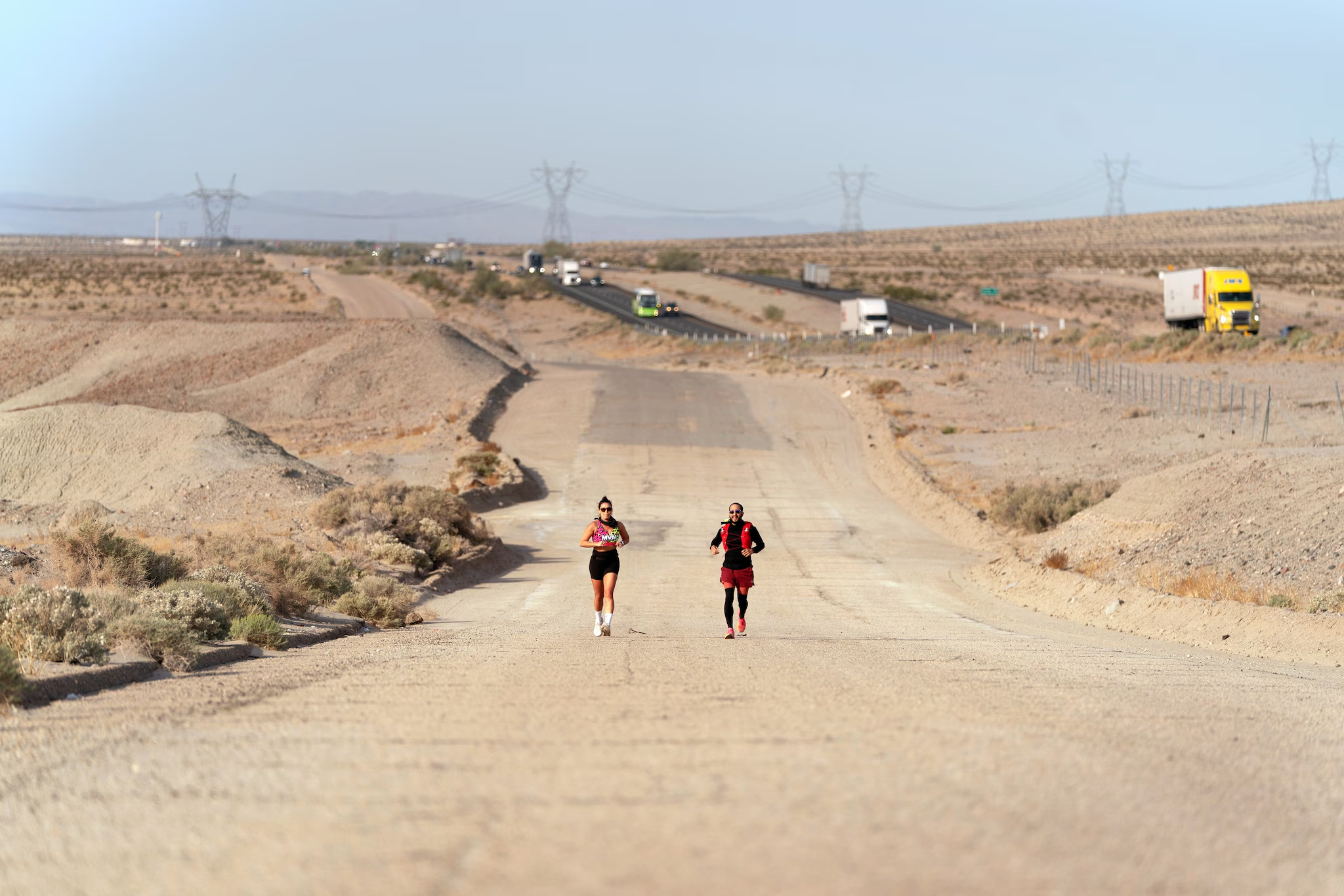
The Speed Project (TSP) is an underground, ultra-endurance relay race that pushes runners to their physical and mental limits. Unlike traditional races, it’s a 340-mile journey from Los Angeles to Las Vegas, with no official rules, no set route, and no finish line clock. Teams of six (or solo runners, known as OGs) navigate deserts, highways, and urban sprawl, running day and night to reach the iconic “Welcome to Las Vegas” sign. It’s raw, chaotic, and exhilarating—a test of grit as much as speed.
The Origins of The Speed Project
How It All Began
In 2014, Nils Arend, a former advertising executive turned running enthusiast, founded The Speed Project with a simple yet audacious idea: create a race that strips away the polish of mainstream marathons. Inspired by his love for running and a desire to build a community around adventure, Arend launched TSP as a countercultural event. What started as a small group of friends running across the desert has grown into a global phenomenon, attracting elite runners, creatives, and rebels alike.
A Race Without Rules?
The Speed Project’s lack of rigid rules is its hallmark. Teams must start at the Santa Monica Pier and end in Las Vegas, but everything in between—route, strategy, rest stops—is up to them. This freedom fosters creativity but also demands meticulous planning. Some teams opt for the shortest path, while others prioritize safer roads or scenic detours. It’s a choose-your-own-adventure race, where every decision carries weight.
Why The Speed Project Feels Like “Cool Runnings”
A Nod to the Underdog Spirit
If you’ve seen Cool Runnings, the 1993 film about Jamaica’s underdog bobsled team, you’ll catch the vibe of The Speed Project. Both share a scrappy, against-all-odds ethos. TSP runners aren’t just athletes; they’re dreamers chasing something bigger than a medal. I remember talking to a runner who trained for months in a small town, cobbling together a team of misfits who became family by the finish line. That camaraderie, that heart—it’s what makes TSP feel like a real-life Cool Runnings.
Diversity in the Desert
The Speed Project draws a kaleidoscope of participants—professional ultra-runners, weekend warriors, artists, and even influencers. In 2023, teams from over 20 countries, including first-timers from South Africa and Japan, tackled the course. This diversity mirrors the eclectic spirit of Cool Runnings, where unlikely heroes find common ground. Whether you’re a seasoned marathoner or a rookie with big dreams, TSP’s open-door policy makes it a melting pot of stories.
How The Speed Project Works
The Relay Format
In the team relay format, six runners split the 340-mile distance, typically running 5- to 10-mile legs in rotation. Each team travels with an RV or support vehicle, carrying supplies, food, and a crew to manage logistics. Runners leapfrog from one leg to the next, often in scorching heat or freezing night temps. The fastest teams finish in under 30 hours, but most take 36–50 hours, battling sleep deprivation and blisters along the way.
The Solo “OG” Challenge
For the truly fearless, the OG (Original Gangster) category is a solo run of the entire 340 miles. These runners, often ultra-marathon veterans, face the desert alone, with only their support crew for company. In 2022, Lisa Smith-Batchen, a 61-year-old ultra-running legend, became one of the few women to complete the OG, finishing in 86 hours. Her story is a testament to the raw determination TSP demands.
Logistics and Planning
Teams must be self-sufficient, carrying their own water, food, and navigation tools. There’s no official aid station or cheering crowd—just you, your team, and the open road. Planning is critical: teams map out routes, calculate pace, and account for desert conditions. A friend who ran TSP in 2021 told me his team got lost near Death Valley at 3 a.m., adding two hours to their time. Lesson learned: a good GPS is your best friend.
The Challenges of The Speed Project
Physical Demands
Running 340 miles, even as a relay, is brutal. Each runner averages 50–60 miles, often in extreme heat (daytime temps can hit 100°F) or cold (nighttime drops to 40°F). Dehydration, muscle cramps, and fatigue are common. Solo runners face an even steeper climb, with some reporting hallucinations from sleep deprivation. Proper training—long runs, heat acclimation, and recovery protocols—is non-negotiable.
Mental Grit
The mental toll is just as fierce. Runners face endless stretches of desolate highway, with nothing but their thoughts and the horizon. Doubt creeps in at 2 a.m. when you’re running alone under the stars. One runner I met described it as “a conversation with your soul—you either break or become unbreakable.” Meditation, visualization, and team support can help keep spirits high.
Logistical Nightmares
Coordinating a team, RV, and supplies across 340 miles is a logistical puzzle. Breakdowns, navigation errors, or miscommunication can derail even the best-laid plans. In 2020, a team’s RV broke down, forcing them to hitchhike for supplies. Pro tip: assign a dedicated crew chief to handle logistics so runners can focus on the road.
Pros and Cons of The Speed Project
| Pros | Cons |
|---|---|
| Unmatched adventure and freedom | Physically and mentally grueling |
| Builds lifelong team bonds | High logistical complexity |
| Inclusive for all skill levels | Expensive (RV rentals, gear, travel) |
| Unique, bucket-list experience | No official support or aid stations |
Comparison: The Speed Project vs. Traditional Marathons
| Feature | The Speed Project | Traditional Marathon |
|---|---|---|
| Distance | 340 miles (relay or solo) | 26.2 miles |
| Rules | No set route or rules | Fixed course, strict rules |
| Support | Self-supported (team RV) | Aid stations, crowds |
| Vibe | Underground, rebellious | Structured, mainstream |
| Finish Line | Las Vegas sign | Timed, official finish |
Unlike marathons, TSP thrives on its raw, unpolished nature. Marathons offer predictability—marked paths, water stations, and cheering fans. TSP trades that for freedom and chaos, appealing to those who crave adventure over structure. If you’re choosing between the two, ask yourself: do you want a medal or a story?
How to Prepare for The Speed Project
Training Tips
Start training at least six months out. Build endurance with long runs (10–20 miles) and practice running multiple times a day to mimic relay legs. Incorporate heat training—sauna sessions or runs in warm climates—to prepare for desert conditions. Cross-training (cycling, swimming) helps prevent burnout and injuries.
Gear Essentials
- Running Shoes: Choose durable, cushioned shoes for long distances.
- Hydration Pack: A 2-liter pack like the CamelBak is ideal.
- Reflective Gear: Night running requires high-visibility vests and headlamps.
- GPS Watch: Track pace and distance with a reliable device like Garmin.
- First-Aid Kit: Bandages, anti-chafing cream, and electrolytes are must-haves.
Team Strategy
Assemble a team with diverse strengths—fast sprinters, steady pacers, and logistical wizards. Plan your route meticulously, using tools like Google Maps or Strava. Test your strategy with shorter relay simulations to iron out kinks. Communication is key: use walkie-talkies or apps like WhatsApp to stay in sync.
People Also Ask (PAA)
What is The Speed Project race?
The Speed Project is a 340-mile relay race from Los Angeles to Las Vegas, with no set route or rules. Teams of six (or solo runners) navigate the distance, supported by an RV or crew, aiming to reach the “Welcome to Las Vegas” sign. It’s a test of endurance, strategy, and teamwork.
How long does The Speed Project take?
Most teams complete the 340-mile relay in 36–50 hours, depending on pace and strategy. Solo runners (OGs) typically take 60–90 hours. Factors like route choice, weather, and team coordination heavily influence the time.
How much does it cost to participate in The Speed Project?
Costs vary but expect $2,000–$5,000 per team for RV rental, fuel, food, gear, and travel. Solo runners may spend less but still need a support crew and vehicle. Budgeting for unexpected expenses (like RV repairs) is wise.
Who can participate in The Speed Project?
Anyone can apply—elite runners, amateurs, or adventurers. Teams need six runners and a support crew, while solo runners need ultra-running experience. Applications open annually via The Speed Project’s website, with limited spots.
Why The Speed Project Matters
A Community of Rebels
TSP isn’t just a race; it’s a movement. It attracts people who reject conformity and embrace the unknown. The community—runners, crew, and fans—shares a passion for pushing boundaries. Social media buzz, especially on Instagram, amplifies this vibe, with teams posting gritty, real-time stories of their journey.
A Test of Human Spirit
Every TSP finisher emerges with a story of triumph. Whether it’s overcoming a sprained ankle or rallying a team through a sandstorm, these moments forge resilience. I’ll never forget a runner’s post-race reflection: “The desert doesn’t care who you are—it humbles everyone. But when you finish, you’re not the same person who started.”
How to Get Involved
Applying for The Speed Project
Visit The Speed Project’s official website to apply. Spots are limited, and teams are chosen based on their story, vibe, and commitment. Applications typically open in late fall, with selections announced a few months before the March race.
Finding a Team
If you don’t have a crew, join running communities on platforms like Strava or Reddit’s r/ultrarunning. Local running clubs or TSP’s Instagram page are great for connecting with potential teammates. Be upfront about your experience and goals to find the right fit.
Best Tools for Training and Planning
- Strava: Track runs and connect with runners.
- Google Maps: Plan routes and calculate distances.
- Garmin Connect: Monitor pace, heart rate, and recovery.
- Weather Underground: Check desert weather forecasts.
- REI: Shop for high-quality running gear and supplies.
FAQ
Is The Speed Project safe?
While TSP is intense, safety depends on preparation. Teams must carry enough water, food, and first-aid supplies. Night running requires reflective gear and headlamps. Always have a charged phone and backup GPS. Accidents are rare, but the desert is unforgiving—plan accordingly.
Can beginners run The Speed Project?
Yes, but they need solid training. Beginners should aim for the relay format, where each runner covers 50–60 miles total. Start with a base of 30–40 miles per week and build up. Joining an experienced team helps ease the learning curve.
What’s the best route for The Speed Project?
There’s no “best” route—it depends on your priorities. The shortest path (via I-15) is fastest but busier. Scenic routes through Joshua Tree or Death Valley add miles but are stunning. Use Google Maps and Strava to balance distance, safety, and vibe.
How do teams navigate The Speed Project?
Teams use GPS devices, smartphones, or apps like Gaia GPS for navigation. Pre-race route planning is crucial, as is a reliable support vehicle with maps and backup power. Test your navigation tools beforehand to avoid surprises.
Why is The Speed Project so expensive?
Costs come from RV rentals ($1,000–$2,000), fuel, food, gear, and travel. Splitting expenses among six runners helps, but solo runners bear the full cost. Budgeting for contingencies (like vehicle repairs) is essential to avoid mid-race stress.
Final Thoughts
The Speed Project is more than a race—it’s a journey into the unknown, where every step tests your body, mind, and soul. Like Cool Runnings, it’s about defying expectations and finding strength in community. Whether you’re a seasoned ultra-runner or a dreamer with a pair of sneakers, TSP offers a chance to write your own story. So, lace up, gather your crew, and chase the Vegas sign. The desert’s waiting.